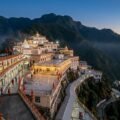
The Vaishno Devi mantras every Katra pilgrim repeats on the Trikuta climb — their Sanskrit roots, exact meanings and the spiritual weight behind each syllable.
The Vaishno Devi mantras that echo through the Trikuta hills are far more than ritual phrases — they are the spiritual scaffolding of one of India’s most demanding pilgrimages. Therefore, every devotee climbing the 13-km path from Katra to the holy cave should know exactly what these chants mean, when to use them, and why they have endured for centuries.
Moreover, the right mantra at the right moment transforms a tough mountain trek into a moving meditation. The breath syncs with the syllables. The exhaustion fades. The cave at the top suddenly feels closer than it actually is.
On This Page
Quick Summary at a Glance
- Jai Mata Di — The universal Vaishno Devi greeting and rallying chant for every pilgrim on the route.
- Om Aim Hreem Kleem Vaishnavyai Namah — The core Sanskrit beej mantra for Mata Vaishnavi.
- Om Aim Hreem Kleem Chamundayai Vichche — The powerful Navarna mantra invoking all three forms of the Goddess.
- Jaikara Sherawali Da — The collective Punjabi-Dogri chant heard along the entire yatra path.
- Aigiri Nandini (Mahishasura Mardini Stotram) — The classical Sanskrit hymn praising the warrior Goddess form.
- Best time to chant — Brahma Muhurta (4:00 AM to 6:00 AM) or during ascent and darshan.
Why the Vaishno Devi Mantras Matter So Much
The Vaishno Devi shrine sits inside a natural cave on the Trikuta mountain in Reasi district, Jammu and Kashmir. She is self-manifest as three Pindis described as the goddesses Mahakali, Mahalakshmi, and Mahasaraswati. Consequently, no single mantra captures her full energy. Each chant approaches Mata Rani from a different angle.
Furthermore, the climb itself is sacred. Devotees walk roughly 13 kilometres each way, much of it uphill. As a result, the mantras serve as both spiritual offering and physical aid — they regulate breath, build endurance and pull the mind away from fatigue.
How Devotees Actually Use These Chants
Notably, pilgrims do not chant in isolation. The entire yatra route from Katra base camp to the Bhawan throbs with collective devotion. Groups of pilgrims, with chants of “Jai Mata Di” on their lips, and devotional music playing on loudspeakers, marched along the yatra route towards the shrine for Mata’s darshan.
Additionally, the mantras shift naturally as the pilgrimage progresses. Simple call-and-response chants dominate the climb. Then, inside the cave, more formal Sanskrit invocations take over. Finally, on the descent, devotional bhajans and aarti verses fill the air.
The 5 Essential Vaishno Devi Mantras Every Pilgrim Should Know
The following five chants form the spiritual core of the entire Vaishno Devi tradition. Each one has its own purpose, its own rhythm and its own moment in the pilgrimage. Below, every mantra is broken down with its Sanskrit form, meaning and recommended use.
1. Jai Mata Di — The Soul of the Yatra
This is the single most heard phrase on the entire Vaishno Devi route. The expression translates simply as “Victory to the Divine Mother”. However, its emotional weight far exceeds those four English words.
How to chant: Loudly, collectively, with raised arms or folded hands.
When to use: Throughout the trek, especially when energy flags. Many pilgrims shout it out as they pass other groups, creating a continuous wave of devotion along the path.
Significantly, “Jai Mata Di” is also the standard greeting between strangers on the yatra. Two unknown pilgrims passing each other on a steep stretch will instinctively raise the chant together. As a result, the climb becomes a shared experience rather than an individual struggle.
2. Om Aim Hreem Kleem Vaishnavyai Namah — The Core Beej Mantra
This is the principal Sanskrit invocation dedicated specifically to Mata Vaishnavi. Chanting the following mantras is considered extremely fruitful in the worship of Mata Vaishno Devi: mantra: “Om Aim Hreem Kleem Vaishnavyai Namah” Chant this mantra 108 times. The mantra works through its three beej (seed) syllables.
Breakdown of the syllables:
- Aim — The seed sound of Saraswati, invoking wisdom and clarity.
- Hreem — The seed sound of Mahamaya, invoking divine illusion and cosmic power.
- Kleem — The seed sound of attraction and Kama Beeja, drawing in grace and prosperity.
How to chant: 108 times daily using a rudraksha or kamal-gatta mala. Sit facing east or north, ideally during Brahma Muhurta. Devotees should sit on a clean asana with closed eyes.
Furthermore, this mantra is especially recommended for devotees who cannot physically make the yatra. Therefore, chanting it from home with sincerity is considered a valid spiritual offering to Mata.
3. Om Aim Hreem Kleem Chamundayai Vichche — The Navarna Mantra
This is the famous Navarna (nine-syllable) mantra from the Durga Saptashati. The mantra invokes Mata in her unified Tridevi form — Mahakali, Mahalakshmi and Mahasaraswati combined. Significantly, this is the exact triadic energy enshrined in the Vaishno Devi cave through the three Pindis.
Meaning: “Salutations to the Goddess Chamunda, the slayer of Chanda and Munda, who removes all obstacles.”
How to chant: 108 or 1008 times during Navratri, or at minimum 27 times daily. Many devotees recite it inside the holy cave when their turn for darshan arrives.
Moreover, this mantra is the standard Shakta opening chant in nearly every Devi puja across India. Hence, knowing it well means a pilgrim can participate meaningfully in the cave aarti and the formal puja conducted by the temple priests.
4. Jaikara Sherawali Da — The Yatra’s Collective Heartbeat
This call-and-response chant is unique to North Indian Devi worship and is heard constantly on the Vaishno Devi route. The full standard form is “Jaikara Sherawali Da — Bol Sache Darbar Ki Jai” — meaning “Raise the victory cry of the Lion-Rider — say Victory to the True Court”.
How it works: One pilgrim or group leader shouts “Jaikara Sherawali Da” and everyone within earshot responds with “Bol Sache Darbar Ki Jai”. The exchange creates an immediate spiritual community along the path.
When to use: Most powerful during steep climbs near Ardhkuwari, Hathi Matha and the final stretch to the Bhawan. The collective rhythm helps tired legs keep moving.
In addition, the chant carries a regional cultural weight. The word “Sherawali” literally means “the one who rides a lion” — a reference to Mata’s divine vahana (mount). As a result, devotees feel they are calling out to the warrior Goddess herself, not just any deity.
5. Aigiri Nandini (Mahishasura Mardini Stotram)
This is the classical Sanskrit hymn composed by Adi Shankaracharya in praise of the Goddess as Mahishasura Mardini — the slayer of the buffalo demon. The hymn has 21 verses and is considered one of the most musically powerful stotrams in the entire Devi tradition.
Opening line: “Aigiri Nandini Nanditamedini Vishwa Vinodini Nandanute” — “O daughter of the mountain, joy of the world, praised by all creation.”
How to chant: The full stotram takes about 8-10 minutes to recite or sing. Many devotees play it on their phones during the climb. Others learn the opening 4-5 verses by heart and recite them as they walk.
Notably, the meter of this hymn is uniquely vigorous and almost martial. Therefore, it pairs perfectly with the demanding Trikuta ascent. The rhythm itself energises the body while the words invoke divine protection.
Vaishno Devi Mantras — Side-by-Side Comparison
Each of these five chants serves a different purpose. Therefore, the table below maps when, where and how to use each one effectively. Pilgrims who internalise this table tend to extract far more spiritual depth from their yatra.
| Mantra | Language | Best Used During | Repetitions |
|---|---|---|---|
| Jai Mata Di | Hindi | Entire trek, group moments | Continuous, spontaneous |
| Om Aim Hreem Kleem Vaishnavyai Namah | Sanskrit beej | Daily home sadhana, pre-yatra | 108 times daily |
| Om Aim Hreem Kleem Chamundayai Vichche | Sanskrit (Navarna) | Cave darshan, Navratri | 108 or 1008 times |
| Jaikara Sherawali Da | Punjabi-Hindi | Steep ascent sections | Spontaneous group chant |
| Aigiri Nandini Stotram | Classical Sanskrit | Walking meditation, aarti | 1 full recitation |
The Right Way to Prepare Before Chanting
Pilgrims often jump into chanting without preparation. However, a few simple practices dramatically deepen the experience. The ancient Devi traditions emphasise inner readiness as much as outer recitation.
Personal Cleanliness and Clothing
Bathe before any formal mantra session. Furthermore, wear clean clothes — preferably white, yellow or saffron, as these colours are considered most auspicious for Devi sadhana. On the yatra route, simple Indian attire works perfectly well.
Direction and Posture
Notably, traditional texts recommend sitting facing east or north during Devi mantra recitation. These directions are linked to positivity and spiritual growth. Furthermore, the posture should be steady — cross-legged on a clean asana or seated upright on a chair if needed.
The Mala and Counting
Use a rudraksha, kamal-gatta or red sandalwood mala of 108 beads for serious Vaishno Devi mantras. Additionally, do not let the mala touch the ground or your feet. Most devotees keep it inside a small cloth bag between sessions.
Best Times to Chant Vaishno Devi Mantras
Timing matters in mantra sadhana. Specifically, three windows are considered exceptionally powerful for Devi worship throughout the year and across the day.
- Brahma Muhurta (4:00 AM to 6:00 AM) — The most spiritually charged hours of the day, ideal for the Vaishnavyai beej mantra.
- Tuesdays and Fridays — Mata’s special weekdays, when devotees fast, light diyas and chant 108 rounds.
- Chaitra and Sharad Navratri — The nine-day festivals when temple footfall peaks and mantra power is believed to multiply.
- Ashtami and Navami — The 8th and 9th days of Navratri, the most auspicious for Chamundayai recitation.
- During the trek itself — Any moment on the yatra path qualifies as sacred time for devotional chanting.
Moreover, Chaitra Navratri 2026 has just begun the new yatra season with strong momentum. Around 15,000 devotees seeking the blessings of Mata Vaishno Devi on the first day of Chaitra Navratri showed up despite heavy rain. Hence, festival days deliver an intense collective chanting atmosphere unavailable at other times.
Mantras to Chant at Each Yatra Checkpoint
The Vaishno Devi yatra is broken into recognisable stages. Each stage suits a different chant. Therefore, knowing which mantra fits where adds spiritual rhythm to the journey.
Katra Base Camp to Banganga
Start with steady “Jai Mata Di” chants as you collect your yatra parchi (registration slip) and begin the climb. The Banganga checkpoint is where Mata is believed to have created a stream by shooting an arrow into the ground. As a result, devotees sprinkle the holy water on their heads while chanting her name.
Banganga to Ardhkuwari
This stretch is steep. Therefore, the collective “Jaikara Sherawali Da” works best here. At Ardhkuwari (also called Garbh Joon), devotees crawl through a narrow cave where Mata is said to have meditated for nine months. The Navarna mantra suits this moment.
Ardhkuwari to Sanjichhat
This is the longest middle section. Pilgrims often play Aigiri Nandini or Vaishno Devi Chalisa on speakers here. Furthermore, the helicopter pad at Sanjichhat marks the modern shortcut for those flying in from Katra.
Sanjichhat to the Bhawan
The final approach is the most charged stretch of the entire yatra. Switch to the formal “Om Aim Hreem Kleem Vaishnavyai Namah” as the cave entrance comes into view. Then, during the actual darshan of the three Pindis, recite the Navarna mantra silently.
What These Mantras Actually Do Spiritually
Beyond cultural significance, each chant carries specific spiritual effects according to traditional Shakta texts. Notably, the beej mantras work on the subtle body rather than the conscious mind.
Aim — The Saraswati Seed
The syllable Aim corresponds to throat chakra activation. Therefore, regular chanting clears speech, sharpens learning and increases mental clarity. Devotees in study or creative work especially benefit from this seed sound.
Hreem — The Mahamaya Seed
Hreem is the most universal Devi beej, often called the seed of the Goddess herself. Furthermore, it works on the heart chakra and dissolves emotional blockages. The sound itself produces a vibration that calms the nervous system.
Kleem — The Kama Beeja
Kleem governs attraction in its broadest sense — drawing in love, prosperity, opportunity and grace. As a result, devotees facing material struggles often emphasise this syllable in their daily practice.
Original Insight — The Forecast for Vaishno Devi Yatra and Chanting Culture
Looking ahead, the Vaishno Devi pilgrimage is undergoing a quiet transformation. The Shri Mata Vaishno Devi Shrine Board has expanded online registration, helicopter capacity and battery car services since 2023. Consequently, pilgrim numbers are projected to keep rising through 2026 and beyond.
Meanwhile, the chanting culture itself is evolving. Younger devotees increasingly play recorded mantras through Bluetooth speakers rather than singing. However, the spontaneous group chanting of “Jai Mata Di” and “Jaikara Sherawali Da” remains untouched by technology. Hence, this human element will likely outlast every digital change at the shrine.
Furthermore, with global Hindu diaspora travel rising, more pilgrims from the United Kingdom, the United States and Australia are joining the yatra. As a result, English-language pronunciation guides for these mantras are becoming an essential resource. Devotees should ideally learn the original Sanskrit rather than relying on transliterated approximations.
The Bottom Line
The Vaishno Devi mantras described above form a complete spiritual toolkit for any pilgrim. Specifically, “Jai Mata Di” and “Jaikara Sherawali Da” carry the trek. The Sanskrit beej mantra and the Navarna sustain daily sadhana. The Aigiri Nandini stotram offers a deeper classical immersion when time allows.
Therefore, the simplest practical approach is this — memorise the first three, learn at least the opening verses of Aigiri Nandini, and let the call-and-response Jaikara emerge naturally on the path. With these five chants on your lips, the 13-km climb to Mata’s cave becomes far less a physical ordeal and far more a moving devotion.
Frequently Asked Questions
What is the most powerful Vaishno Devi mantra?
The most widely recommended Sanskrit mantra is “Om Aim Hreem Kleem Vaishnavyai Namah”. It directly invokes Mata Vaishnavi through three powerful beej syllables — Aim (wisdom), Hreem (cosmic energy) and Kleem (attraction). Devotees chant it 108 times daily for best results.
How many times should I chant Vaishno Devi mantras?
The traditional count is 108 repetitions per session, performed with a 108-bead mala. However, shorter counts of 11, 21 or 27 are also accepted for those short on time. During Navratri, devotees often increase the count to 1008 across the nine days.
Can I chant Vaishno Devi mantras at home if I cannot visit the shrine?
Yes, absolutely. Mata Vaishno Devi is believed to receive sincere devotion from anywhere in the world. Therefore, daily home chanting of the beej mantra and Navarna mantra is fully valid. Set up a small altar facing east or north, light a diya, and chant with focused devotion during Brahma Muhurta.
What does “Jaikara Sherawali Da” actually mean?
“Jaikara Sherawali Da” means “Raise the victory cry of the Lion-Rider Goddess”. Sherawali refers to Mata Vaishno Devi as the rider of a lion or tiger — her divine mount. The full chant continues with “Bol Sache Darbar Ki Jai”, meaning “Say Victory to the True Court”.
When is the best time to chant Vaishno Devi mantras during the yatra?
Different mantras suit different yatra stages. Use “Jai Mata Di” and “Jaikara Sherawali Da” continuously throughout the trek for group energy. Switch to the Sanskrit beej mantra near the Bhawan. Inside the cave during darshan of the three Pindis, recite the Navarna mantra silently for deepest impact.
Do I need a guru to start chanting Vaishno Devi mantras?
For the simple devotional chants like “Jai Mata Di” and the Aigiri Nandini stotram, no formal initiation is needed. However, serious daily sadhana with the beej mantras is traditionally enhanced by guru diksha. That said, sincere devotion is considered the most important qualification by every Vaishno Devi tradition.
What should I wear and how should I sit while chanting?
Wear clean clothes in white, yellow or saffron colours after a bath. Sit on a clean asana facing east or north, keep your spine straight, and hold the mala in your right hand. Furthermore, keep your tongue and breath relaxed so the syllables flow naturally rather than mechanically.