About Mata Vaishno Devi Temple
History, legend of Sridhar, the Trikuta cave, Trishakti Pindis and the Shrine Board — everything that makes Vaishno Devi a Maha Shakti Peeth.
The Living Goddess of Trikuta
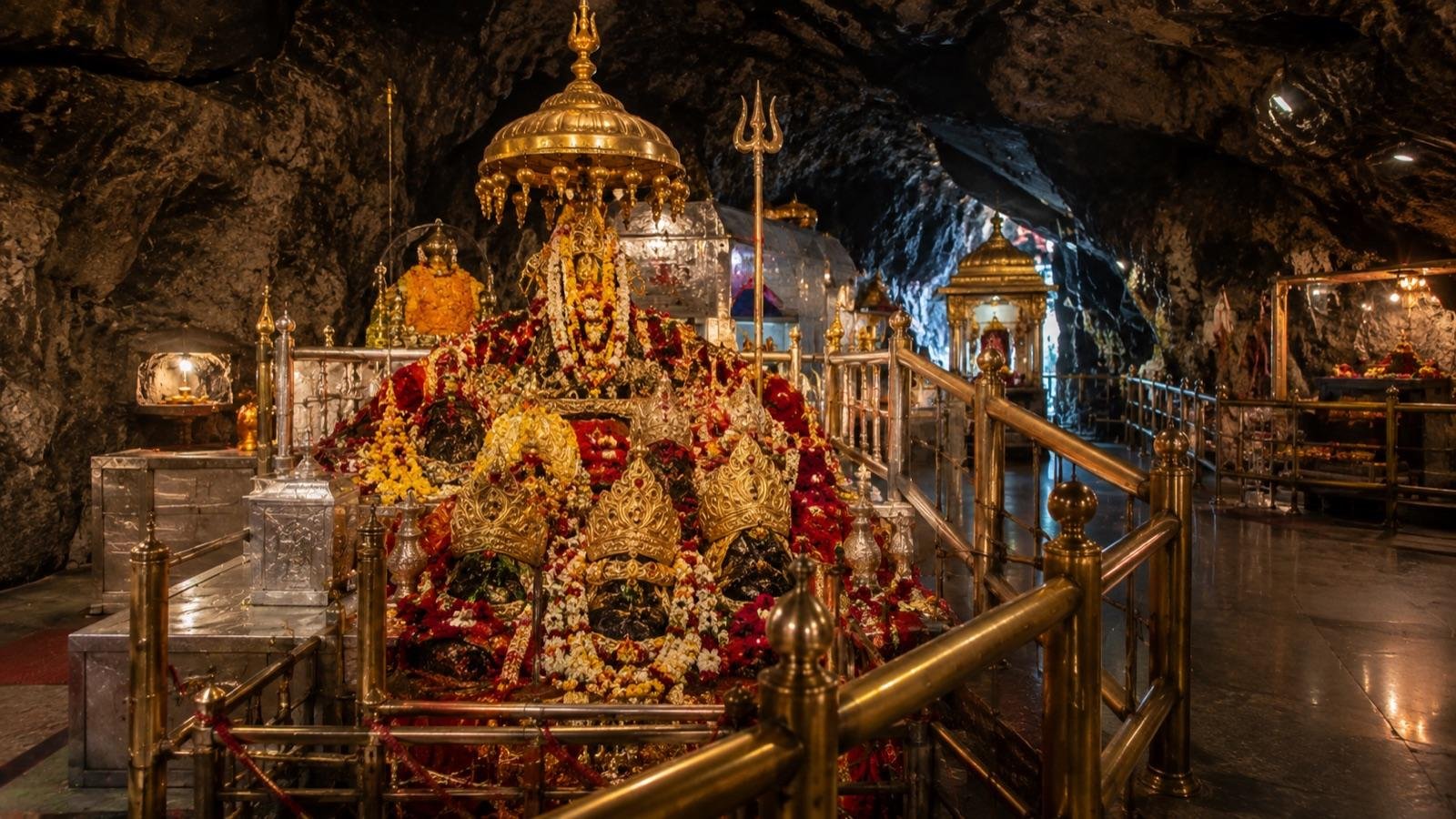
Mata Vaishno Devi — also called Maa Vaishnavi, Trikuta-vasini, Sherawali Mata — is an aspect of the Mother Goddess (Adishakti) who is believed to reside eternally inside a holy cave on the southern slope of the Trikuta range. The mountain takes its name from the three peaks (Tri-kūṭa) on which the Goddess is said to have manifested as three Pindis — Mahakali, Mahalakshmi and Mahasaraswati — collectively known as the Trishakti Pindis.
Vaishno Devi is venerated as a Vaishnavi avatar — born of the combined energies of the three principal Goddesses to defeat evil in the Kali Yuga. She is considered the only female manifestation worshipped continuously through Satya, Treta, Dvapara and Kali Yugas, making the shrine one of the holiest Shakti Peeths after the original 51.
The Legend of Sridhar & the Cave
The most popular legend traces the formal worship of Mata Vaishno Devi to a devotee named Pandit Sridhar, a brahmin from the village of Hansali near Katra. Childless and impoverished, Sridhar was once instructed by the Mother in a dream to organise a Bhandara (community feast). A young girl mysteriously appeared at the feast and fed an unending stream of guests, including the tantric Bhairon Nath, before vanishing into the Trikuta hills.
Sridhar searched for the divine girl for years until she finally revealed her cave to him. He became the first traditional priest of the shrine, and his descendants — known as Baridars — held hereditary worship rights at the cave until the Shrine Board was constituted in 1986.
Bhairon Nath & the Half-Cave (Ardhkuwari)
Pursued by the tantric Bhairon Nath, the Goddess meditated for nine months inside a small cave near present-day Ardhkuwari — the Garbh Joon. She then revealed her cosmic form, beheaded Bhairon at the summit and granted him moksha when he repented. His severed head landed at the site of the current Bhairon Baba Temple, two kilometres above the Bhawan. Mata declared that a Vaishno Devi yatra remains incomplete without darshan of Bhairon Baba — a tradition every yatri still follows.
The Holy Cave — Old & New
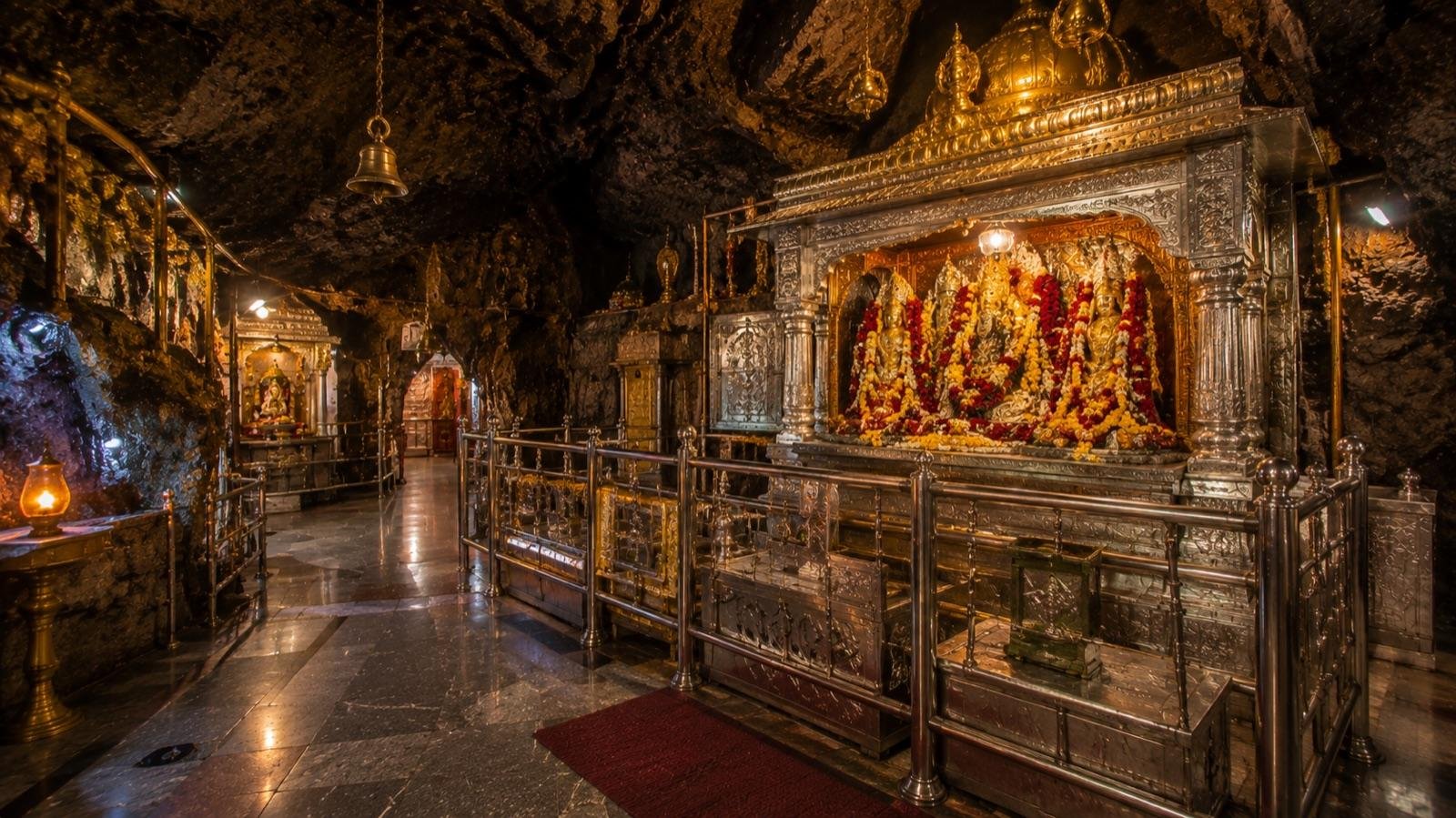
The original cave is a narrow natural opening, around 30 metres long, with the three Pindis visible only after wading through icy water from the Ban-Ganga stream. Due to massive crowds, a parallel New Cave (Naya Gufa) was carved in 1977 alongside the Old Cave to allow continuous darshan throughout the year. The natural Old Cave is now opened only during a few weeks of low footfall in winter, when registered pilgrims can have darshan through the original passage.
Shri Mata Vaishno Devi Shrine Board (SMVDSB)
The Shri Mata Vaishno Devi Shrine Board was constituted on 30 August 1986 through an Act of the Jammu & Kashmir Legislative Assembly. Headed by the Lt. Governor of J&K as Chairman, it took over the management of the shrine from the hereditary Baridars. The Board administers:
- Darshan, aarti and puja schedule
- Yatra registration counters (parchi) and the RFID system
- Helicopter operations to Sanjichhat helipad
- Battery vehicle, palki, pony and porter rates
- SMVDSB accommodation at Katra (Niharika, Trikuta Bhawan, Shakti Bhawan, Saraswati Bhawan) and at Ardhkuwari, Sanjichhat and Bhawan
- Free langar (bhojan) at Ardhkuwari, Sanjichhat and Bhawan
- Medical posts, drinking water and toilets along the yatra route
Vaishno Devi Among Shakti Peeths
While the 51 Shakti Peeths are tied to body parts of Goddess Sati, the Vaishno Devi cave is classified as a Maha Shakti Peeth — a self-manifested Shakti site outside the Sati cycle. It is grouped with Jwala Devi (Kangra), Naina Devi (Bilaspur), Chintpurni and Bajreshwari in the so-called “Devi Triangle” of North India, completing which is considered highly meritorious.
Plan Your Yatra Next
Continue to the darshan timings & aarti schedule, the full 13 km yatra guide or check our helicopter booking page.
