
Mata Vaishno Devi Yatra Guide 2026
The complete 13 km Katra–Bhawan trek explained — old route, Tarakote Marg, ropeway, battery car and how long each section takes.
How the Yatra Works in One Paragraph
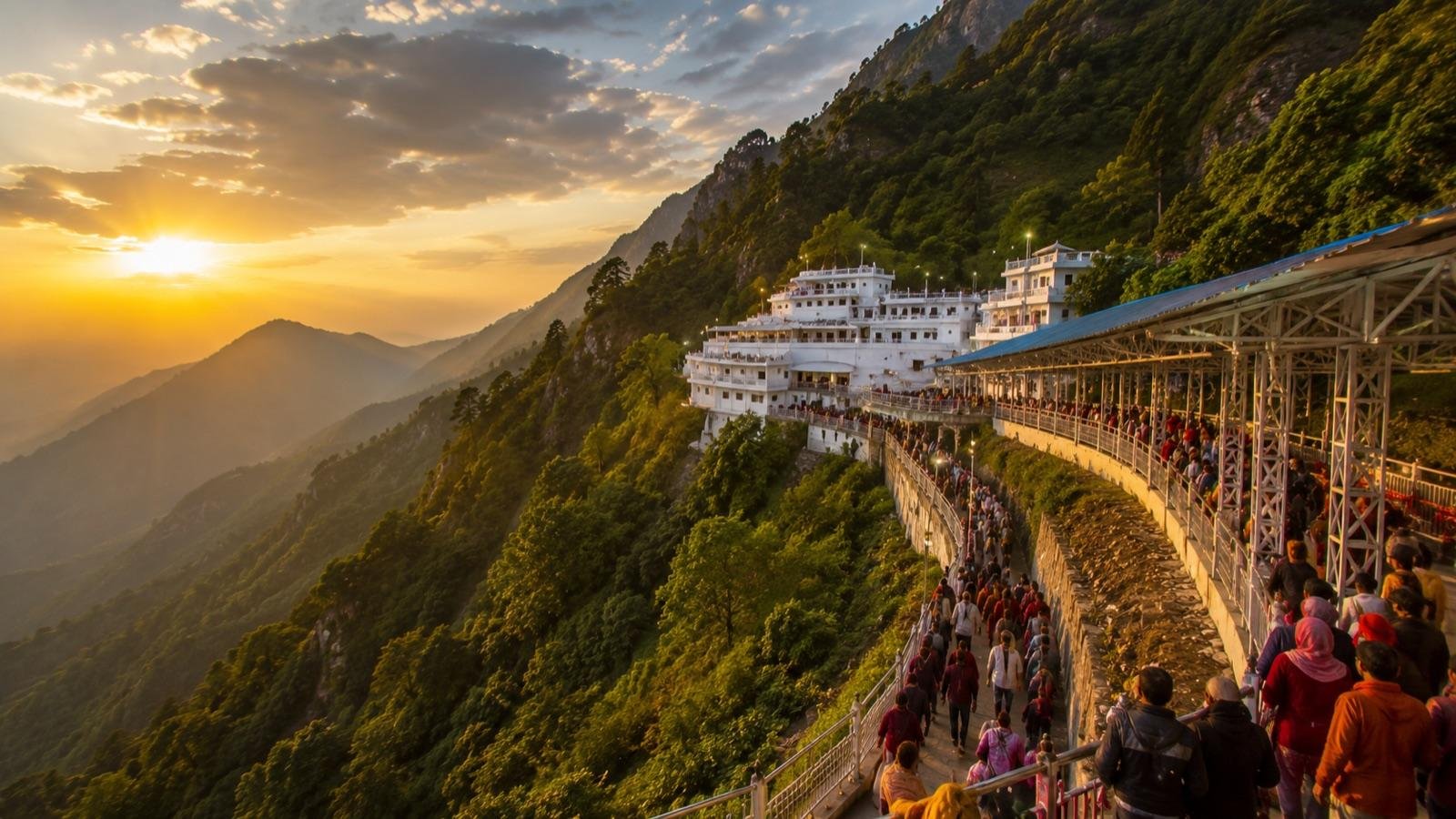
The Vaishno Devi yatra begins at Katra base camp (3,150 ft) and ends at the Bhawan / Holy Cave (5,200 ft). The trek is 13 km one way on the traditional route via Banganga, Charanpaduka and Ardhkuwari, or 14 km via the newer Tarakote Marg. Most pilgrims complete the up-trek in 6 to 8 hours on foot, 2.5–3 hours by pony, or 8 minutes by helicopter. After darshan and Bhairon Baba, the down-trek takes another 4–5 hours.
Yatra Routes Compared
| Route | Distance | Surface | Best For |
|---|---|---|---|
| Traditional Route — Banganga → Charanpaduka → Ardhkuwari → Sanjichhat → Bhawan | 13 km | Old paved track, stairs in many sections, narrow | First-time pilgrims, ponies & palki users, devotees who want to follow the original path |
| Tarakote Marg — Tarakote (1.5 km from Katra) → Sanjichhat → Bhawan | 14 km (gentler gradient) | Wide, smooth, gradient under 4%, motorable for SMVDSB battery vehicles | Senior citizens, families with small children, those who walk slowly or prefer battery vehicle |
| Helicopter — Katra helipad → Sanjichhat → 2.5 km walk / pony / battery to Bhawan | 2.5 km walk after helipad | Air → smooth path | Time-poor, mobility-restricted, senior citizens |
The Traditional Route — Step by Step
Step 1 — Banganga (Yatra Check Post)
Located 1.5 km uphill from Katra bus stand, Banganga is the start of the trek. Your RFID Yatra Slip is activated here. There is a holy stream where pilgrims rinse their feet — said to have sprung when Mata struck an arrow into the rocks to quench Hanuman’s thirst.
Step 2 — Charanpaduka (1.5 km from Banganga)
A small temple marking the spot where Mata briefly rested. Her foot impressions are believed to be preserved on a rock here.
Step 3 — Ardhkuwari (6 km mark)
The halfway point. The Goddess meditated here for nine months inside the Garbh Joon cave. Pilgrims crawl through the narrow 15-foot-long cave; entry is regulated by a separate token slip issued at the Ardhkuwari counter. Free dormitory rooms and a free langar are available. Many yatris break their journey here for the night.
Step 4 — Hathi Matha (steep section)
The next 2.5 km climb to Sanjichhat is the steepest part of the entire yatra. Many pilgrims hire a pony from Ardhkuwari to ease this section.
Step 5 — Sanjichhat (9.5 km from Katra)
Mountain plateau at around 6,200 ft with the Sanjichhat helipad, SMVDSB rooms, langar and medical post. Helicopter pilgrims start their walk to the Bhawan from here.
Step 6 — Bhawan / Holy Cave (13 km from Katra)
The Bhawan complex sits at 5,200 ft. Pilgrims deposit belongings at the cloakroom, take a holy dip in the cold-water tank, and enter the queue for the New Cave / Old Cave. Darshan of the Trishakti Pindis follows.
Bhairon Baba Temple — 2 km Above the Bhawan
The yatra is considered incomplete without visiting Bhairon Baba. Options:
- Trek: 2 km, 1.5 hours uphill from Bhawan via a paved stair track.
- Ropeway: An aerial ropeway connects the Bhawan with the Bhairon ji mandir. The Shri Mata Vaishno Devi Shrine Board states the operating times are 9 am to 5 pm. The Board sets the fare and does not publish it on that page, so check the official ropeway page for the current ticket price before you travel.
See our dedicated Bhairon Baba page.
Yatra Modes — Cost & Time
| Mode | Time (Katra → Bhawan) | Indicative Cost (₹) |
|---|---|---|
| On foot | 6 – 8 hours | Free |
| Pony (Khachhar) — Banganga to Bhawan | 3 – 4 hours | 1,800 – 2,500 (regulated rate card) |
| Palki (palanquin, 4-bearers) | 5 – 6 hours | 5,000 – 7,000 |
| Porter / Pithoo (carry child or bag) | Walking pace | 700 – 1,200 |
| Battery vehicle (Tarakote Marg only) | ~45 min | ~309 one way, ~509 return (subject to revision) |
| Helicopter (Sanji Chhat) | 8 min flight + 2.5 km walk | 2,320 one way (advance booking) |
Best Time of Year to Do the Yatra
| Season | Months | What to Expect |
|---|---|---|
| Spring & early summer | Mar – May | Pleasant 15–25°C, Chaitra Navratri rush in March/April |
| Monsoon | Jul – Sep | Heavy rain, occasional landslides; carry rainwear. Lower crowds. |
| Autumn & festival | Sep – Nov | Best weather, Sharad Navratri peak rush, Diwali extended hours |
| Winter | Dec – Feb | Cold (-5°C at Bhawan), occasional snow at Sanjichhat. Quietest queues. |
What to Pack
- Original photo ID (Aadhaar / passport) — required for yatra slip
- Cotton clothing in summer, woollens & thermals in winter
- Good trekking shoes with grip
- Reusable water bottle & ORS sachets
- Hand torch (for night descent)
- Basic medicines (paracetamol, antacid, dipro-spray for joints)
- Small backpack — locker at Banganga and Bhawan available
- Cash (in small denominations) for chunri shops and donations
Yatra Etiquette & Safety
- Walk in single file on the right side of the track; ponies have right of way on the left.
- Do not litter — fines apply. Use bins along the track.
- Avoid the trek if you have severe asthma, recent heart surgery or pregnancy beyond 6 months. Helicopter is allowed.
- Listen for landslide alerts in monsoon and stick to covered sections.
- Mobile network is patchy after Ardhkuwari — keep an offline yatra map.
Sample Day-by-Day Plans
1-Day Yatra (helicopter)
Day 1: Reach Katra by 7 AM → helicopter at 9 AM → darshan by 11 AM → Bhairon Baba by 1 PM → return helicopter / battery → leave Katra by evening.
2-Day Yatra (trek up, trek down)
Day 1: Yatra parchi at 6 AM, start trek at 7 AM, reach Ardhkuwari by 10 AM, lunch at langar, continue to Bhawan by 3 PM, evening darshan and rest in SMVDSB room.
Day 2: Morning aarti, Bhairon Baba, lunch, start descent at noon, reach Katra by 5 PM.
3-Day Yatra (relaxed)
Day 1: Katra arrival + acclimatise.
Day 2: Full yatra to Bhawan, stay overnight.
Day 3: Bhairon Baba, descent, sightseeing in Katra.
Next: Book your yatra parchi, see the helicopter booking guide or learn how to reach Katra.
